

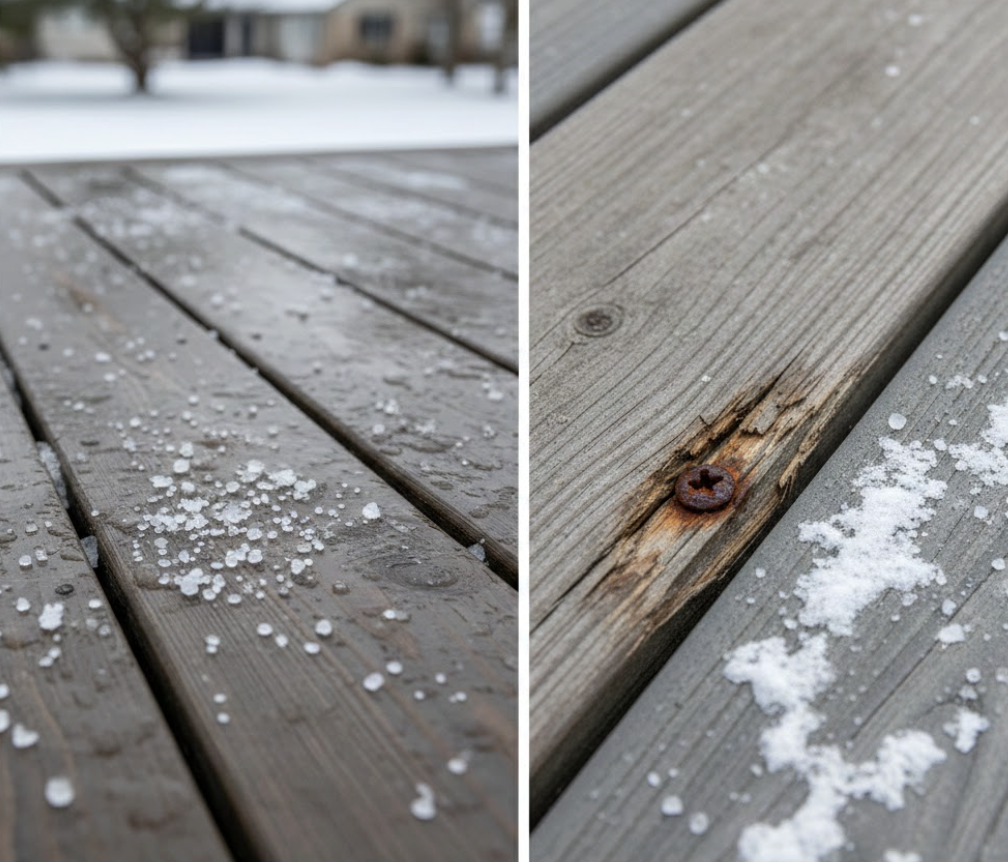
When it snows, ice melt products are a go-to solution for many homeowners in order to keep decks and walkways safe. However, most do not realize that the salt used to melt ice can actually cause real damage to their decks over time.
Most ice melt products are made out of sodium chloride (rock salt), calcium chloride, or magnesium chloride. These lower the freezing point of water, helping ice melt faster. While this is effective against ice, it can be harsh on exterior surfaces. This is especially true for wood and composite decking. The older the deck, the more susceptible it is to damage from ice melt products.
Salt can damage decks in many ways. It draws moisture into the wood, leading to swelling, cracking, and warping as temperatures fluctuate. Repeated exposure weakens wood fibers, causing reduced lifespans for decks. Salt residue can break down sealants and finishes, leaving surfaces unprotected against moisture and UV damage.
Ice melt salts can cause surface discoloration for composite decks. This leads to fading and residues that are difficult to remove. Over time, this can make even decks look worn and neglected.
In addition, ice melt products can cause corrosion. Salt accelerates rust on metal fasteners, screws, and railings. This can compromise the structural integrity of your deck.
So, what should you do instead? We recommend using pet-safe and deck-safe ice melt products. Sweeping and rinsing your deck after winter storms can also help to minimise long-term effects.
If your deck already has damage from ice melt salts, CR3 American Exteriors can help. We specialize in deck repairs and replacements. Whether your deck needs a fix or a complete upgrade, our team is ready to help!