What Wind Damage May Look Like
Mar 19, 2026
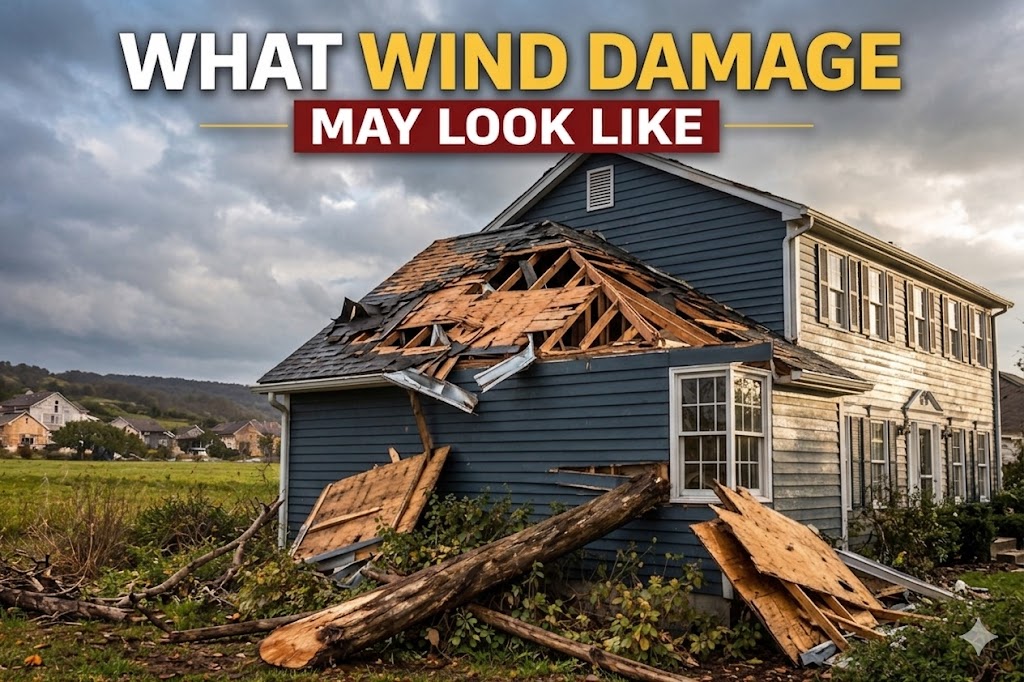
Following the high winds from storms in Maryland, many find themselves looking for damage. The problem is that there may be more damage than many homeowners realize. Even without a tornado, strong gusts can weaken your home’s exterior. Knowing what to look for helps to catch problems early and prevent costly repairs.
Here are some common signs of wind damage:
- Missing or lifted shingles
Strong winds can lift, bend, or pull shingles completely off. Look for bare spots, curling edges, or uneven areas of your roof. - Creased or damaged shingles
Even if shingles are attached, wind can bend or crease them, reducing their ability to protect against water seeping in. - Loose or cracked siding
Certain types of siding can shift, crack, or detach entirely. Gaps may allow moisture in, leading to mold or structural issues over time. - Damaged gutters and fascia
Gutters may have pulled away from the home, leaving it sagging, or filled with debris. This can block drainage and lead to water damage. - Fallen branches and debris
Tree limbs are a common cause of storm damage in Maryland. In fact, even small branches can damage shingles, siding, and windows. - Dented or impacted exterior features
Inspect vents, flashing, and window screens for dents or damage caused by flying debris. - Granules in gutters or downspouts
If you notice that there is an accumulation of shingle granules in your gutters or downspouts, it may indicate your roof has been impacted by high winds.
At CR3 American Exteriors, we understand that wind damage isn’t always easy to spot from the ground. If your home has been through a recent storm, a professional inspection can help identify hidden issues and ensure your exterior is still in good condition, or let you know the next steps if they are needed.