
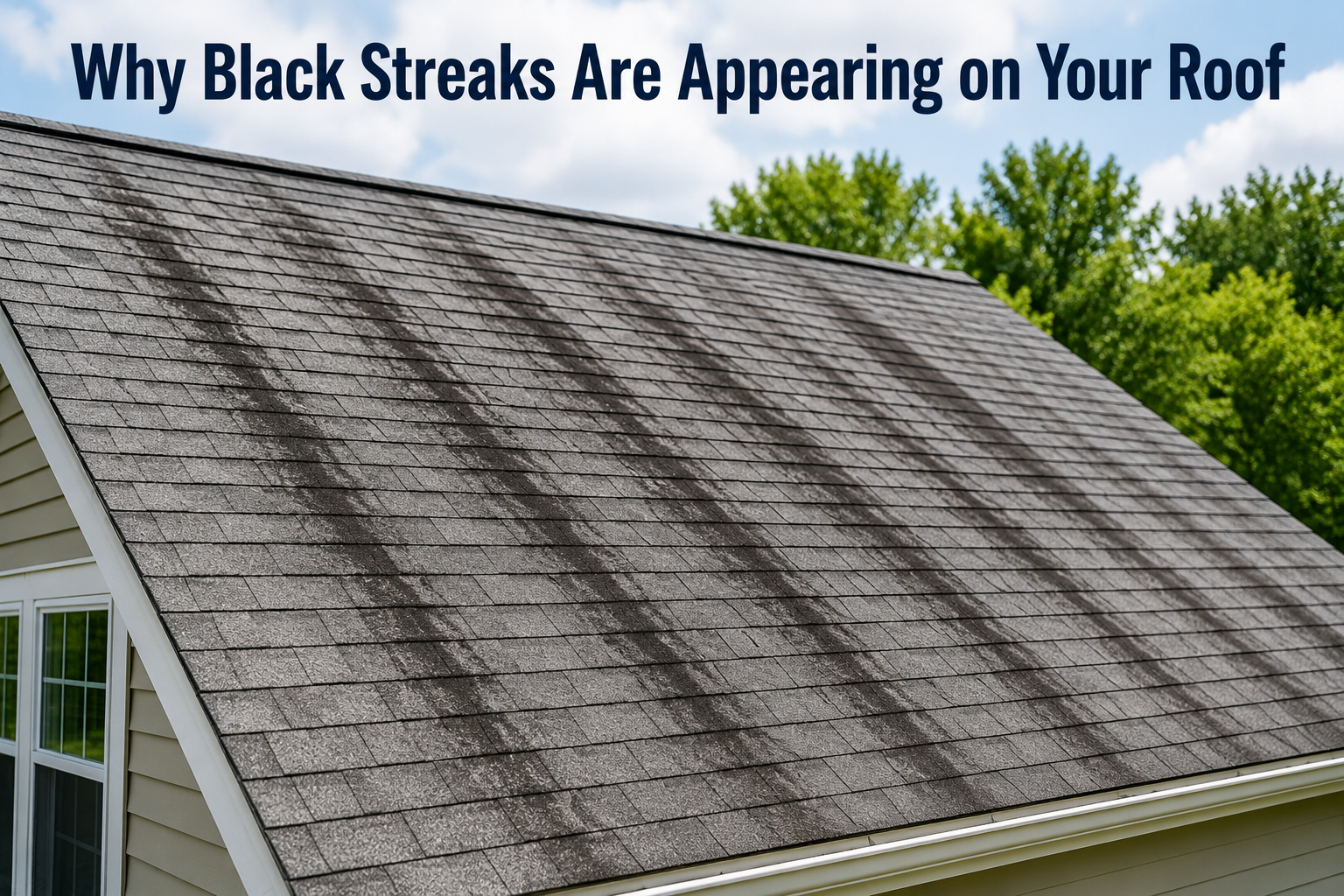
Have you noticed dark streaks appearing on your roof? If so, you are not alone. Many homeowners assume these stains come from dirt, soot, or mold, but the real cause is often a type of algae called Gloeocapsa magma. At CR3 American Exteriors, we help homeowners understand the cause of problems like black streaks and how to address them before they become a bigger issue.
Gloeocapsa magma algae thrives in humid environments. It feeds on limestone filler that is commonly found in asphalt shingles. Over time, it can spread across the roof and create the black streaks homeowners notice from the ground. While the staining may begin as a cosmetic issue, it can eventually impact the performance of your roof if left untreated.
These black streaks can trap moisture against the roofing materials, contributing to premature aging. In some cases, algae growth encourages moss or lichen to develop, leading to even more moisture retention and possible roof damage. Roofs with shaded areas or heavy tree coverage are more vulnerable due to staying damper longer.
Many homeowners try to pressure wash their roofs to remove the stains, but this is not a good idea. It can actually damage shingles by stripping away protective granules. Instead, professional roof cleaning methods that using specialized solutions are usually the safest and most effective option.
Preventing black streaks often involves improving sunlight exposure. This might look like trimming nearby trees and ensuring proper roof ventilation. Many modern shingles are also manufactured with algae-resistant technology to help reduce future growth. SO, if you have an older roof and notice black streaks, there is an even higher chance that you are dealing with Gloeocapsa magma.
If you are seeing black streaks on your roof, it is time for a professional inspection. At CR3 American Exteriors, we offer these inspections for free and help identify the next steps. Call us today!