Why Siding Fades Faster on One Side of Your House
May 13, 2026
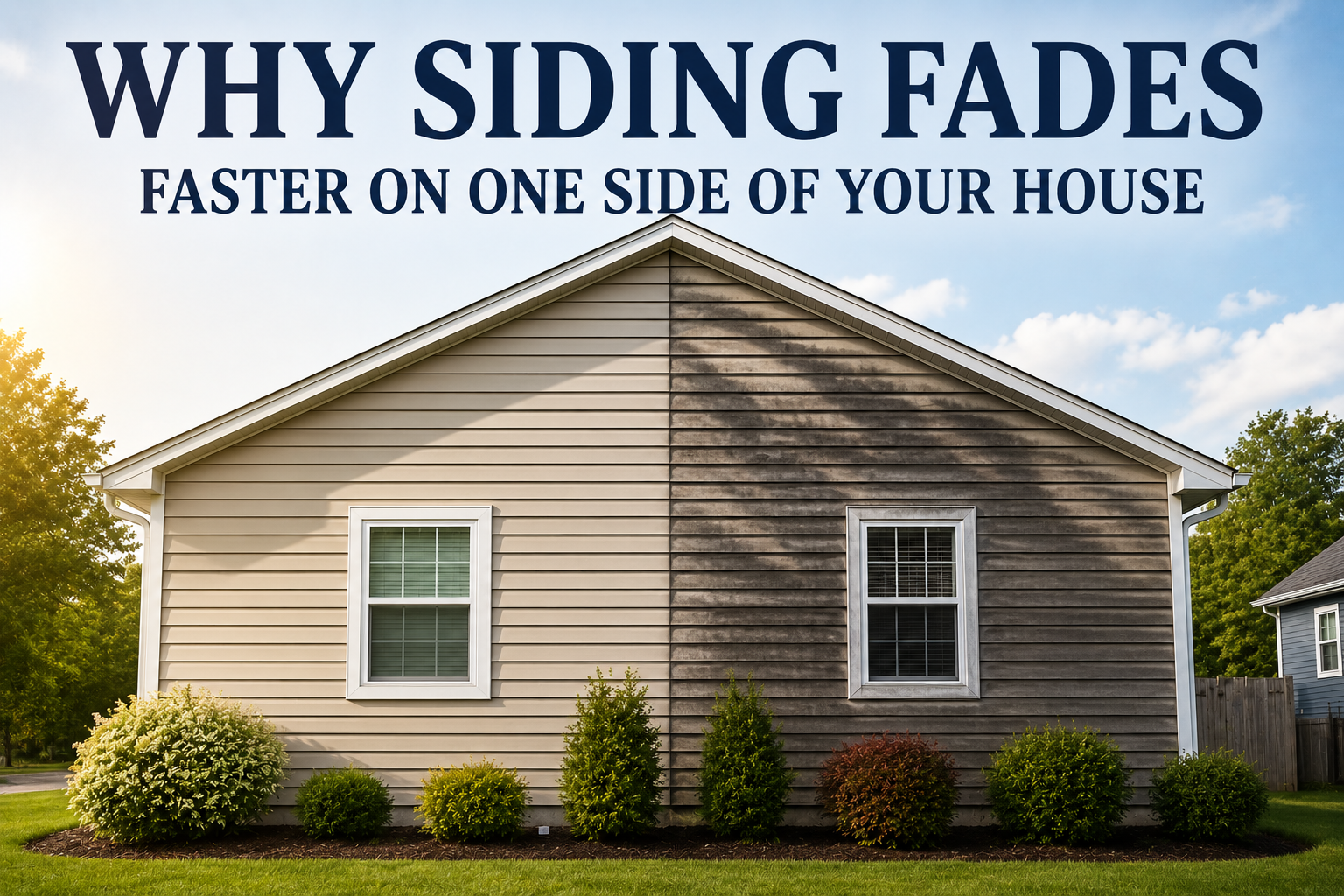
Does it appear that one side of your home looks more faded than the others? If so, you are not imagining it. Uneven fading is very common, and it usually comes down to how your home is exposed to the elements.
Sunlight is one of the biggest factors. The side of your home that gets the most direct sunlight naturally experiences more UV exposure. Over time, UV rays can actually break down the pigments in siding, causing colors to fade.
Heat can also play a role in fading siding colors. Areas that receive more sun also get hotter, accelerating the aging process of materials. This repeated heating and cooling can cause the color to dull faster compared to shaded areas.
Weather exposure also contributes to fading. One side of your home may be more exposed to rain, snow, and even wind depending on its orientation. Other areas of the home may be more shielded by trees, neighboring homes, or fences while the more exposed sides of the home are left to handle the full impact of the elements. Repeated exposure can wear down the surface over time, especially if moisture sits on siding or if debris comes in contact with it during storms.
In some cases, fading can also be linked to the quality of the siding or the original installation. Lower-quality materials or improper installation may lead to faster and more uneven wear.
At CR3 American Exteriors, we help homeowners choose durable materials and proper installation methods, reducing uneven fading. The right approach can keep your home looking consistent and well-maintained for years to come.