
Termites may be small, but they are insanely destructive. For homeowners, especially those with aging siding or exteriors with wood components, termites can cause serious structural damage long before visible signs appear. At CR3 American Exteriors, we understand how exteriors can be affected by pests of all shapes and sizes. It is important for homeowners to know what to look for and what actions to take if they suspect they have termites or other pests.
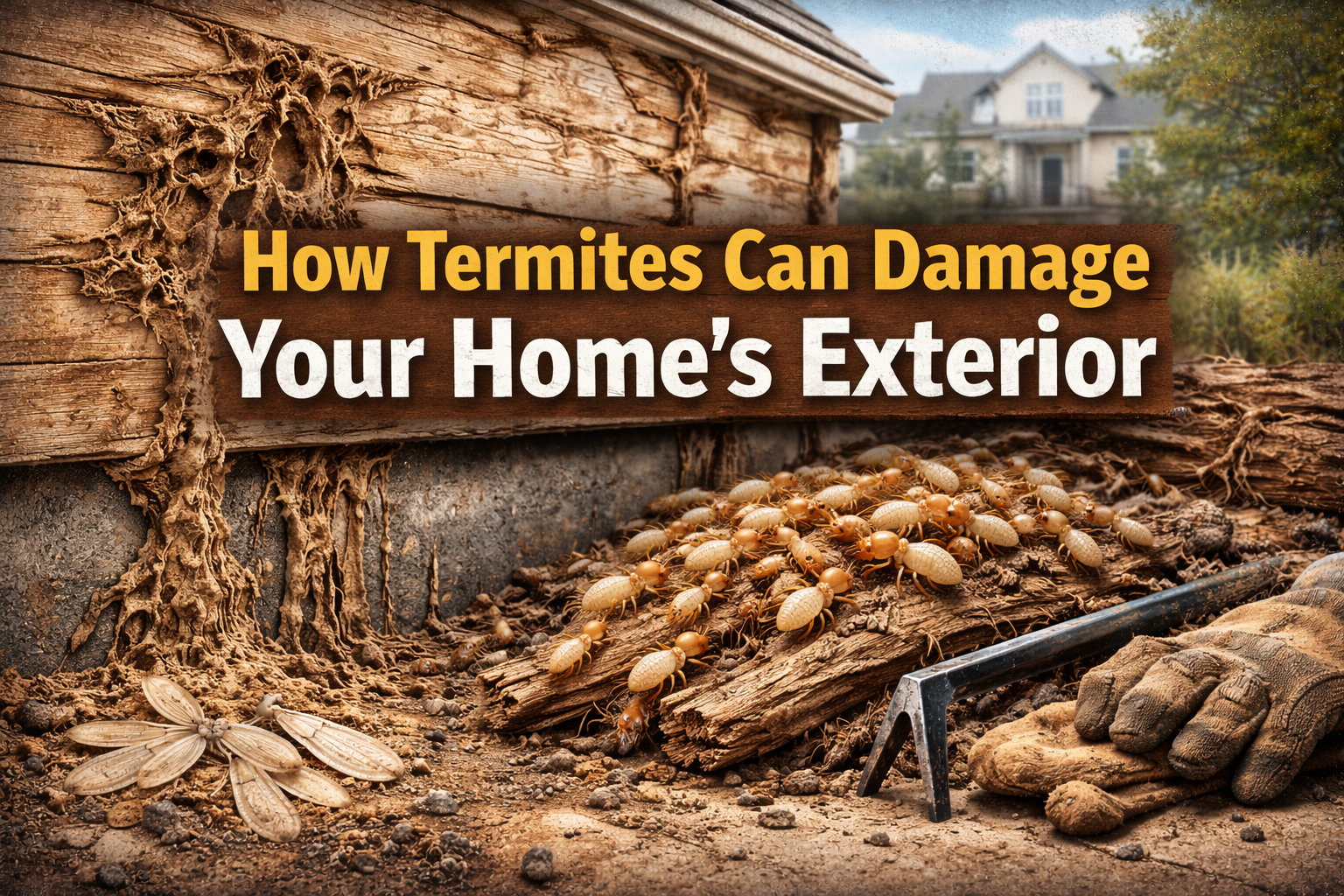
Termites feed on cellulose. This means any wood-based material around the home can be a potential target. This includes wood siding, trim, fascia boards, window frames, decking, and even structural framing behind exterior walls. When moisture is present, the risk increases significantly.
One of the biggest dangers of termites is how fast they work. By the time homeowners notice damage, it may already be advanced. Some common warning signs include:
Hollow-sounding wood
Bubbling or blistering paint that resembles water damage
Mud tubes along foundation walls
Discarded wings near windows or doors
Sagging trim or warped siding
Subterranean termites are the most common type in many areas; they build mud tubes to travel from soil to wood. If your siding sits close to the ground or moisture barriers have deteriorated, the home becomes much more accessible.
Deteriorating siding or trim can conceal termite damage underneath. Damaged wood components can allow moisture intrusion, further attracting pests and accelerating decay. Over time, this can weaken the structure and compromise the integrity of a home.
At CR3 American Exteriors, we focus on more than surface-level repairs. If termite damage is discovered, it’s critical to not only replace affected materials but also correct the underlying issues.
If you notice warning signs, call a pest control professional immediately. Then, reaching out to CR3 American Exteriors for repairs. We are here to help.