
Commercial and residential roofs have many differences, though they may not seem like it at first glance. Both types of roofs are meant to protect a building and keep it safe from the elements. However, materials, structure, and installation can vary quite a bit. At CR3 American Exteriors, we assist property owners in understanding these differences and helping to identify what each individual building needs. Let’s take a look at the three main differences between commercial and residential roofs.
1. Roof Design and Structure
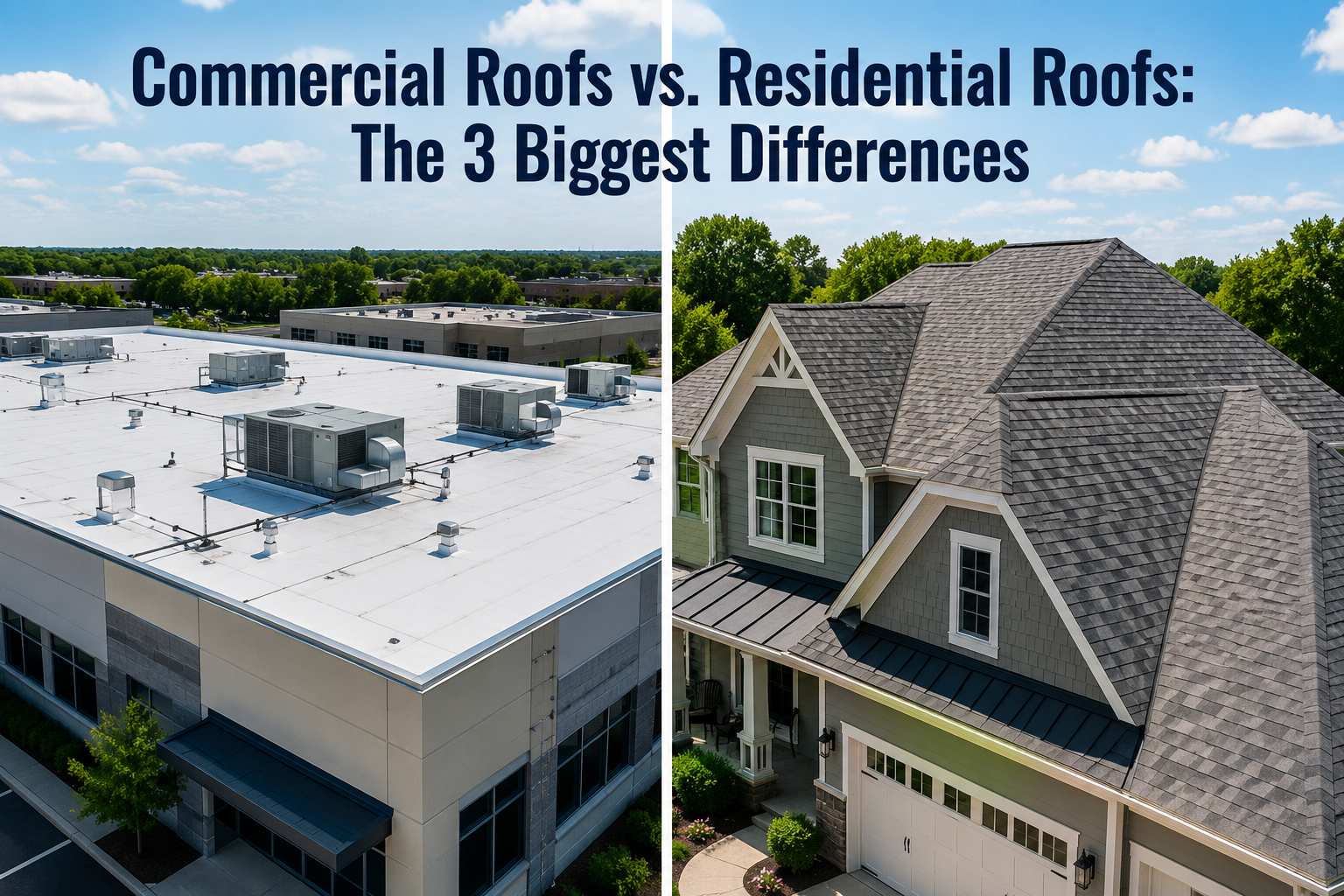
One of the main differences between commercial and residential roofing is the overall design. Residential roofs are often steep-sloped. This design is meant to direct water and snow away for easy run off. These roofs are commonly seen on houses and typically feature shingles for both protection and appearance.
Commercial roofs, however, are typically flat or low-sloped. These flat roofing systems are ideal for larger buildings, allowing space for HVAC units, possible solar panels, and other necessary equipment. However, they also require specialized drainage systems to prevent water from pooling.
2. Roofing Materials
Residential roofing materials are usually selected for appearance and durability. Asphalt shingles are the most common choice, but homeowners may also pick metal, slate, or even cedar roofing depending on the desired style.
Commercial roofs use different materials, designed for durability and long-term performance. Common commercial roofing systems include TPO (Thermoplastic Polyolefin) and EPDM rubber roofing (Ethylene Propylene Diene Monomer). These materials are built to handle larger surface areas and greater wear.
3. Installation and Maintenance
Commercial roofing projects are typically more complex than residential ones. Because commercial buildings are usually larger and flatter, installation takes specialized equipment, experienced crews, and careful planning. Maintenance is also more involved since flat roofs need regular inspections. This helps to catch drainage problems or membrane damage early.
Residential roofs are generally faster to install and easier to maintain. Though, they still require regular inspections and repairs to maximize lifespan.
Whether you own a home or a commercial property, choosing the right roofing system is essential. At CR3 American Exteriors, we provide expert roofing solutions tailored to both residential and commercial properties. Call us today!