
As we always say, when it comes to protecting your home, your roof is the first line of defense. Homeowners are often taken aback when they learn just how much roofing materials have evolved over the years when it comes to durability, performance, and long-term value.
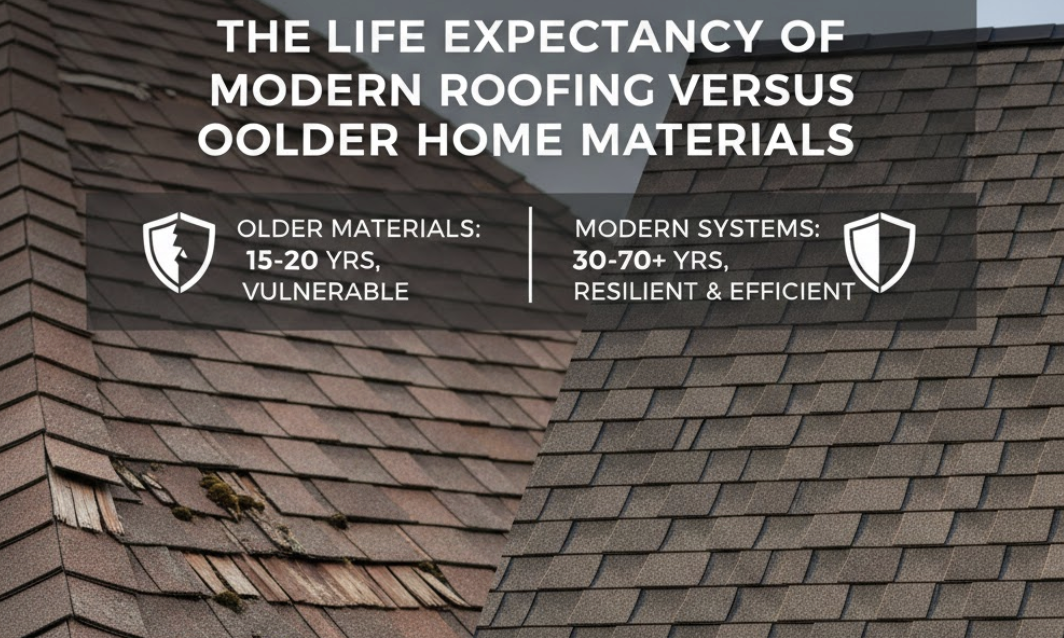
Many older homes were built with materials such as three-tab asphalt shingles, wood shakes, or even metal panels without modern coatings. While these materials worked very well at the time, their average lifespan was often limited. Traditional asphalt shingles typically used to last between fifteen to twenty years, while wood shakes were vulnerable to moisture, rot, fire, and pests. Many older roofing systems also lacked good underlayment and ventilation, further reducing their longevity.
Modern roofing materials nowadays are engineered specifically for strength, resiliency, and efficiency. Asphalt shingles can now last twenty-five to thirty years or more. This is due to improved granule adhesion, construction, and advanced weather resistance. In contrast, metal roofing systems can last forty to seventy years, and synthetic roofing materials are designed to mimic the look of slate or cedar while resisting impact damage and cracking.
Outside of lifespan, modern systems offer additional benefits older materials cannot. Today’s roofs are built with better systems, moisture barriers, and energy-efficient designs. Regulating indoor temperatures and reducing utility costs is another benefit of these roofs. Many materials are also made to withstand high winds, hail impact, and fire resistance. These are critical features for protecting your investment.
For homeowners with aging roofs, upgrading isn’t just about appearance but about long term safety and investing in the future. If you are ready to replace an old roof, or suspect you might need to, call us today for a free investment and consultation.